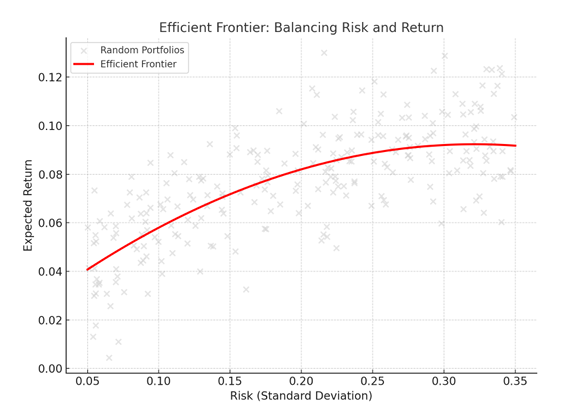
Investors today have more choices than ever, but one of the most powerful tools for building wealth is the Exchange-Traded Fund (ETF). ETFs combine the flexibility of stocks with the diversification of mutual funds, making them a popular choice for both beginners and experienced investors. When used strategically in a portfolio, ETFs can help investors balance risk, lower costs, and achieve long-term goals more effectively.
A Brief History of ETFs
ETFs are a relatively new but revolutionary product in the investment world. The first ETF, called the SPDR S&P; 500 ETF (ticker: SPY), launched in the United States in 1993. It was designed to track the performance of the S&P 500 Index, giving investors instant access to the largest U.S. companies in a single trade. Since then, the ETF market has exploded. From just one fund in the early 1990s, there are now over 9,000 ETFs worldwide managing more than $10 trillion in assets. Today, ETFs cover virtually every market, sector, and strategy imaginable from broad indexes like the S&P 500 to niche themes like clean energy or blockchain technology.
How ETFs Perform vs. Indexes
Most ETFs are designed to track an index (e.g., the S&P 500, NASDAQ 100, or MSCI Emerging Markets). Their performance is usually very close to the index they follow, with small differences known as tracking error.
Index Performance: An index is simply a benchmark, not an investable product. For example, the S&P 500 might return 10% in a year.
ETF Performance: An ETF tracking the S&P 500 (like SPY or VOO) will deliver nearly the same return, usually slightly lower due to expense ratios (often as low as 0.03%–0.10%). Example: Over the past 10 years (2013–2023), the S&P 500 averaged about 12% annualized returns. ETFs like SPY or VOO delivered returns within a fraction of a percentage point of that index, proving their effectiveness in mirroring market performance. The key takeaway is that ETFs let investors capture index-like returns with low costs and high liquidity, something traditional mutual funds often struggle to match.
Benefits of ETF Portfolios
1. Diversification Made Simple: One ETF can give you exposure to hundreds of stocks or bonds, reducing the risk of relying on any single company.
2. Cost-Effective Investing: ETFs usually have much lower fees than actively managed mutual funds, meaning more money stays invested and compounds over time.
3. Liquidity and Flexibility: ETFs trade like stocks, so you can buy or sell them at any time during market hours, unlike mutual funds, which trade once daily.
4. Transparency and Control: Most ETFs disclose their holdings daily, letting investors see exactly what they own.
5. Tax Efficiency: ETFs are structured to minimize capital gains distributions, making them more tax-friendly than mutual funds.
6. Global Access: Today, ETFs provide exposure to nearly every asset class and theme, from global markets to emerging sectors like AI or clean energy.
Why ETF Portfolios Work
By combining different ETFs, investors can create a portfolio that is:
- Broadly diversified across asset classes.
- Aligned with personal risk tolerance and goals.
- Efficient in cost and taxes.
ETFs allow individuals to essentially “own the market” with just a few funds, while maintaining flexibility to rebalance or adjust strategy as needed.
Since their debut in 1993, ETFs have democratized investing by giving everyone access to diversified, index-like returns in a simple, low-cost package. Their ability to mirror market performance closely, while offering liquidity, transparency, and efficiency, makes them a cornerstone of modern portfolios. In today’s investing landscape, ETF portfolios offer one of the smartest, most reliable ways to build long-term wealth.